Highlights
National Background
Investigation Servcies
Consolidated multiple legacy systems into
one unified experience
Replaced system-switching, paper documents, and backlog filled manual processes with a single system that enables reciprocity across the entire federal government.
Led Continuous Vetting UX Designs
Owned the complete CV experience, from monitoring and alert workflows, as well as owning adjudication workflows.
Background
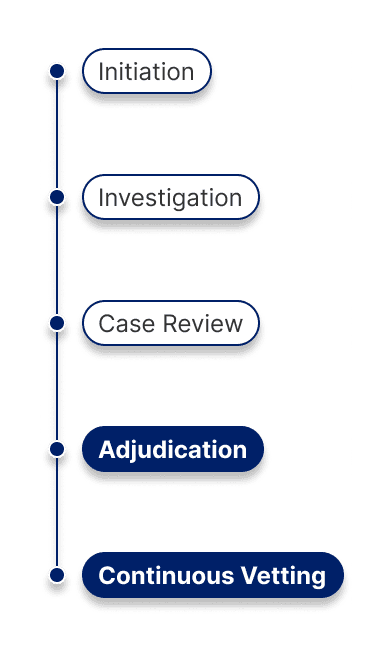
I owned Adjudication UX end-to-end and led the Continuous Vetting experience. GAO found agencies cited Continuous Vetting as a primary benefit of Trusted Workforce 2.0. (GAO)
The Product
NBIS is the backbone of Trusted Workforce 2.0, a federal modernization effort overhauling personnel vetting by creating one government-wide system that enables reciprocity across organizations. It supports federal agencies and partner industry organizations involved in background investigations and clearance decisions.
The Problem
Critical data lived in multiple disconnected systems
High-stakes decision making impaired by lack of traceability, system juggling, manual processes, and paper documents
A long list of backlogged cases, resulting delayed job offers, lost of employment, and uncertainty
Lack of reciprocity between agencies made access difficult for those needing to access multiple agencies.
Periodic reinvestigations occurred every 5-10 years, leaving lengthy gaps for security risks.
The Impact
A single system experience that houses the entirety of the background investigation process, reducing reliance on external systems, paper documents, and manual processes
Reduced backlogs and accelerating the background investigation process
A unified process enabled reciprocity across the entire federal government
Continuous Vetting removed the need for costly periodic reinvestigations with automated alerts and monitoring
Role
Senior UX/UI Designer
Continuous Vetting Design Lead
Adjudication end-to-end
508 Compliance
Design↔Dev Mapping
Defining Ways of Working & Design Execution
Improving team cohesion, accountability, hand-off, and requirements
Overview
I led UX for Continuous Vetting and owned adjudication workflows end-to-end, turning policy into experiences that scaled across federal agencies. I worked with stakeholders and collaborated with nine scrum teams from concept through build. I also owned our design system, drove 508-compliant patterns, and maintained designer↔developer mapping documentation to improve implementation consistency. During a design lead transition, I stepped up to keep work moving, support continuity across teams, and onboard the incoming lead.
Key Responsibilities
Led UX for CV and owned adjudication workflows end to end, from research to deployment.
Owned the design system and drove 508-compliant patterns and guidance
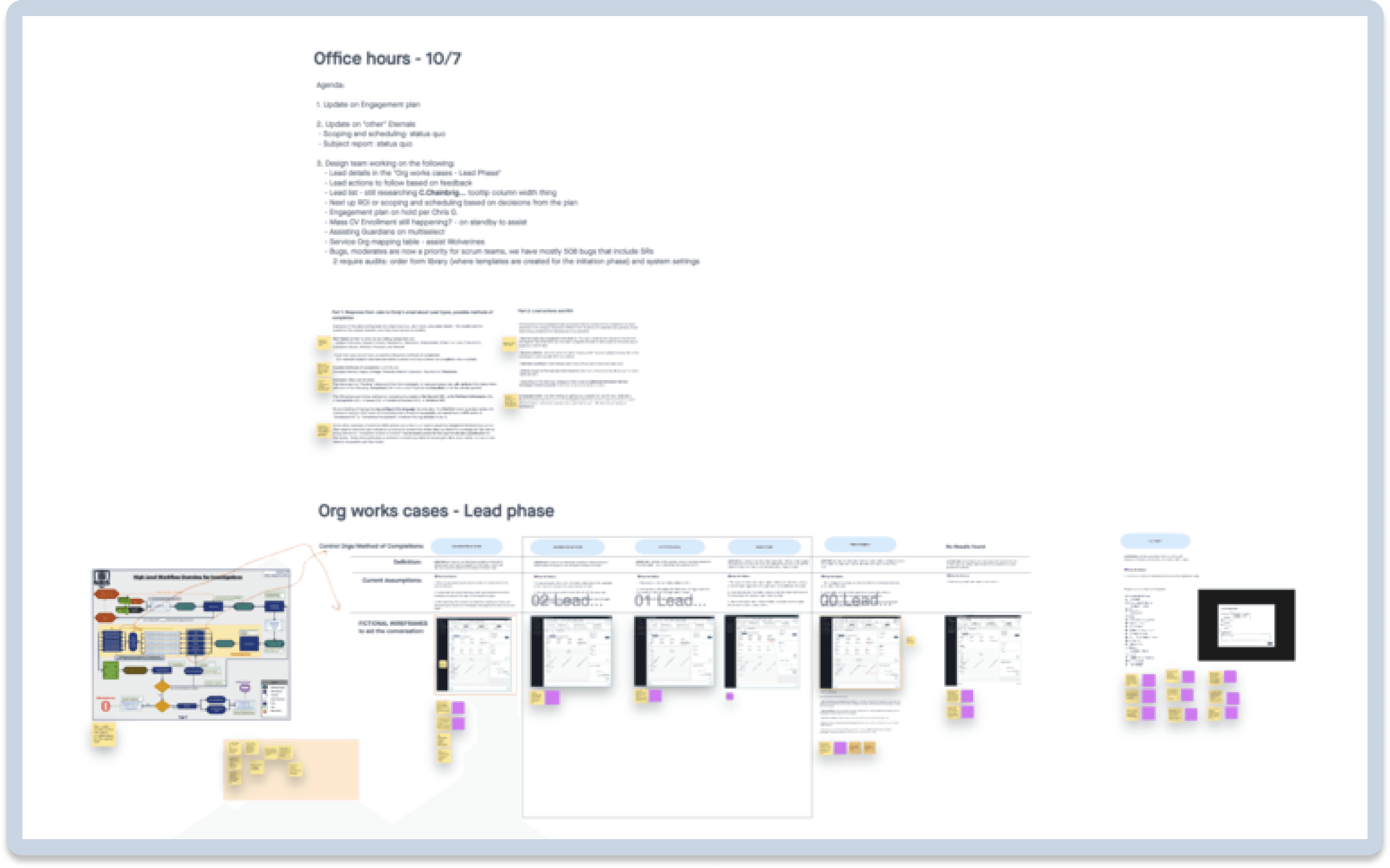
Kept designs consistent and unblocked UX issues from across nine scrum teams through designer↔developer mapping documentation and ongoing design reviews/office hours
Research
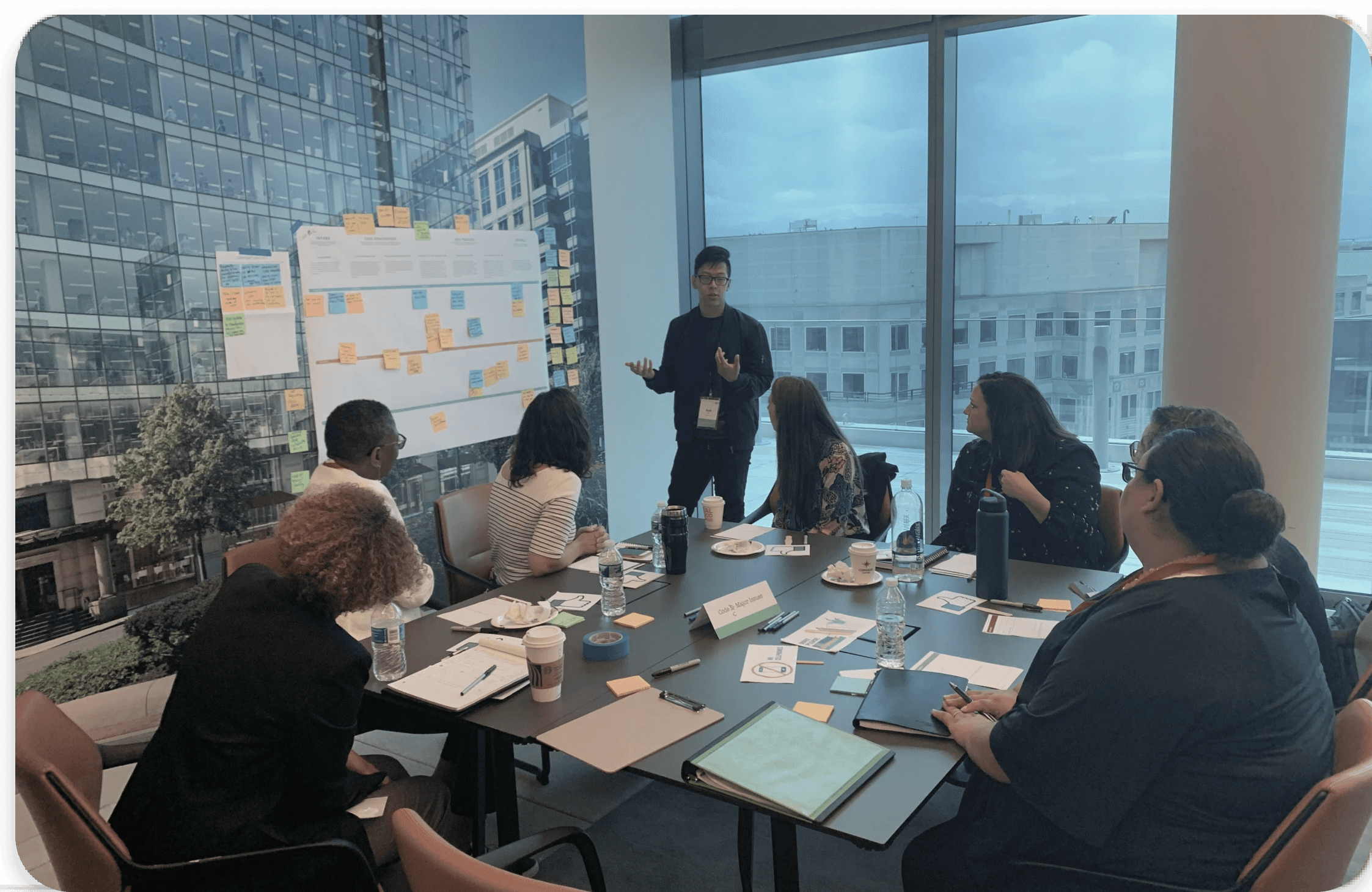
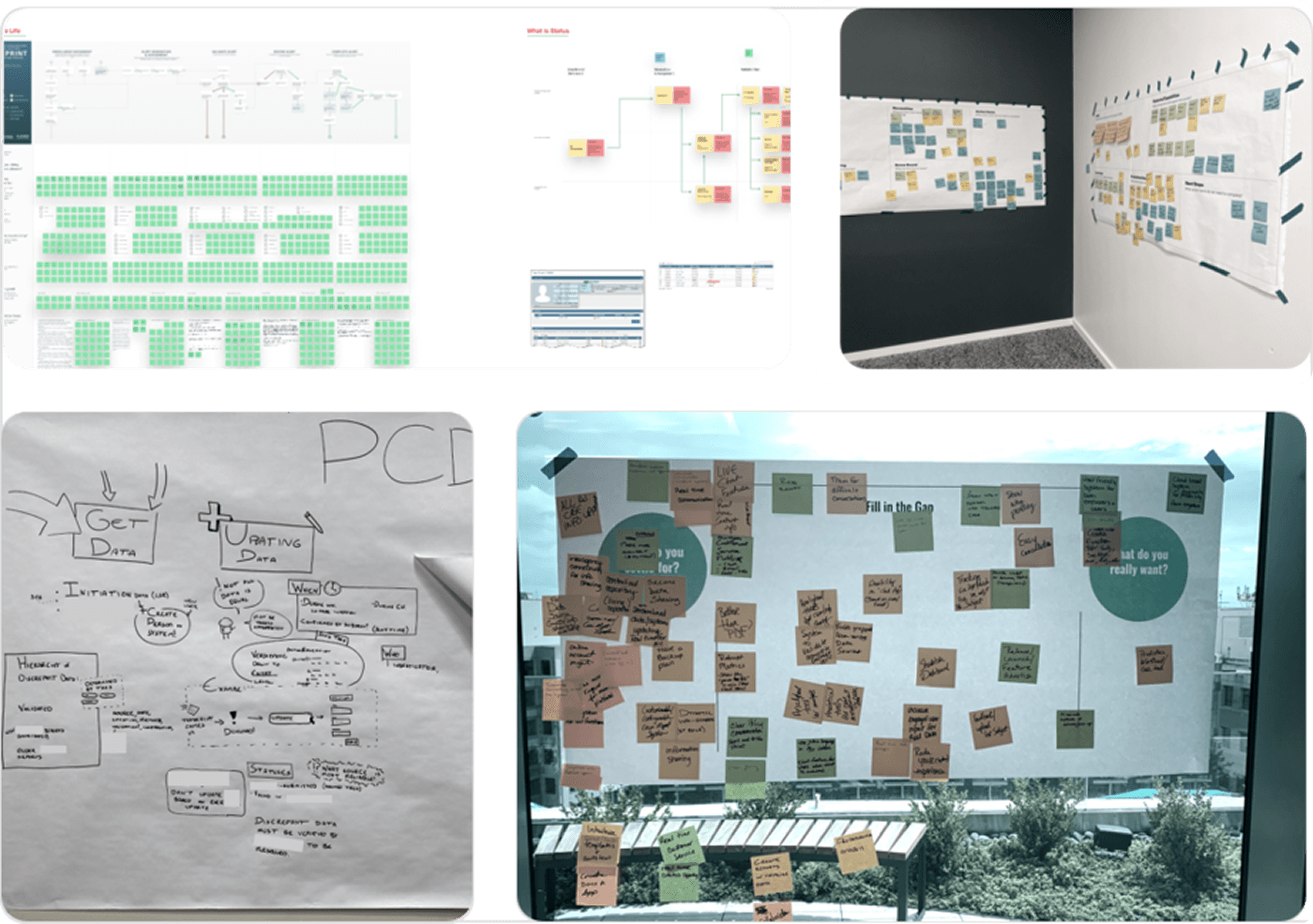
Roughly 45% of features were validated with users before development hand-off. User interviews, usability tests, on-site visits, and multi-agency workshops were key to understanding and building an uniformed platform.
"Rumble" Workshops
User Interviews
Usability Testing
On-site Contextual Inquiries
Design Decisions Led by Research
Understanding the Product
I partnered closely with over 70 federal directors, subject matter experts, and security personnels from different agencies and workflows of the background investigation process, such as investigators, adjudicators, and CV monitors.
Methodology
I led several user research activities. Additionally, I created testing scripts or various activities as well as a note-taking template for the team. The scripts and templates were invaluable in capturing user responses, insights, and actionable next steps.
- Contextual interviews conducted on-site and user workshops (“Rumbles”)
- Heuristic evaluation of existing systems
- Art of the Possible, Gap Analysis, and Crazy 8's
- Round Robin ideation, user surveys, and usability testing
- Prototype walkthrough
User research was critical to understanding the complexities and nuances of the background investigation process. More importantly, through collaborate cross-agency sessions, such as aligning on terminology, helped to bridge the gap between agencies allowing for a uniform platform that works for everyone.
Delivering Designs Even When Requirements Were Unclear
Building out Continuous Vetting
*Limited designs due to security nature of project.
The key component of CV is its ability to automatically source alerts relating to a subject.
A major pain points include manually corroborating between multiple sources, manually evaluating risk level, and number of alerts, and scan-ability.
With the CV subject matters, I led the creation of alert cards, the key visualization that shows all the important information without bogging down the screen.
Crime
High
Alex Potter
###-##-###
Aggravated – Assault
Reported Feb 18,2023
Subject was charged with aggravated assault with the user of a firearm following a traffic argument.
NCIC
Feb 20, 2023
Source 1
Source 1
Source 1
Finance
Info
Alex Potter
###-##-###
New Account
Reported Feb 18,2023
Subject opened credit card account #1920 from Bank of America
Experian Credit Bureau
Feb 20, 2023
Source 1
Source 1
Source 1
Design System and Developer Mapping
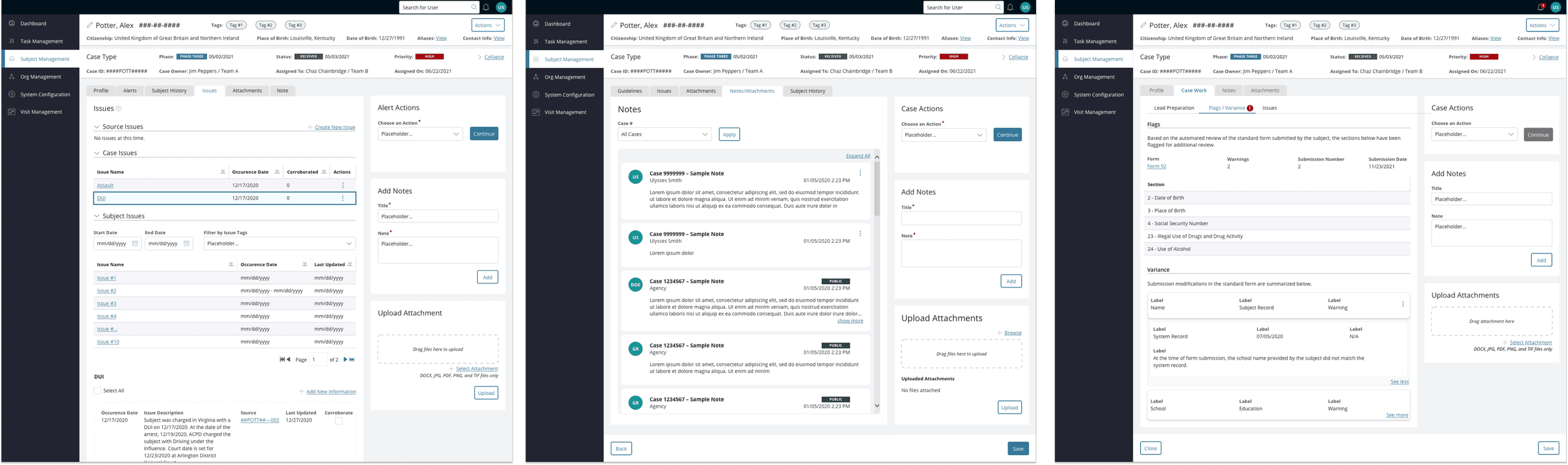
Aside from hands on designs, I maintained our team's design system, championed accessibility, and created a mapping system of components for developers. I was key to facilitating hand-off, preventing design drift, and ensuring an accessible platform.
Impact
Design
NBIS represented one of the largest and most complex modernization efforts within the federal government. My work built the UI foundations of NBIS, especially for the Adjudication and Continuous Vetting processes.
Outcome
Despite many organizational and adaption setbacks, the successful roll-out of CV continues to be a major improvement and well-received feature of the Trust Workforce 2.0 roll out.